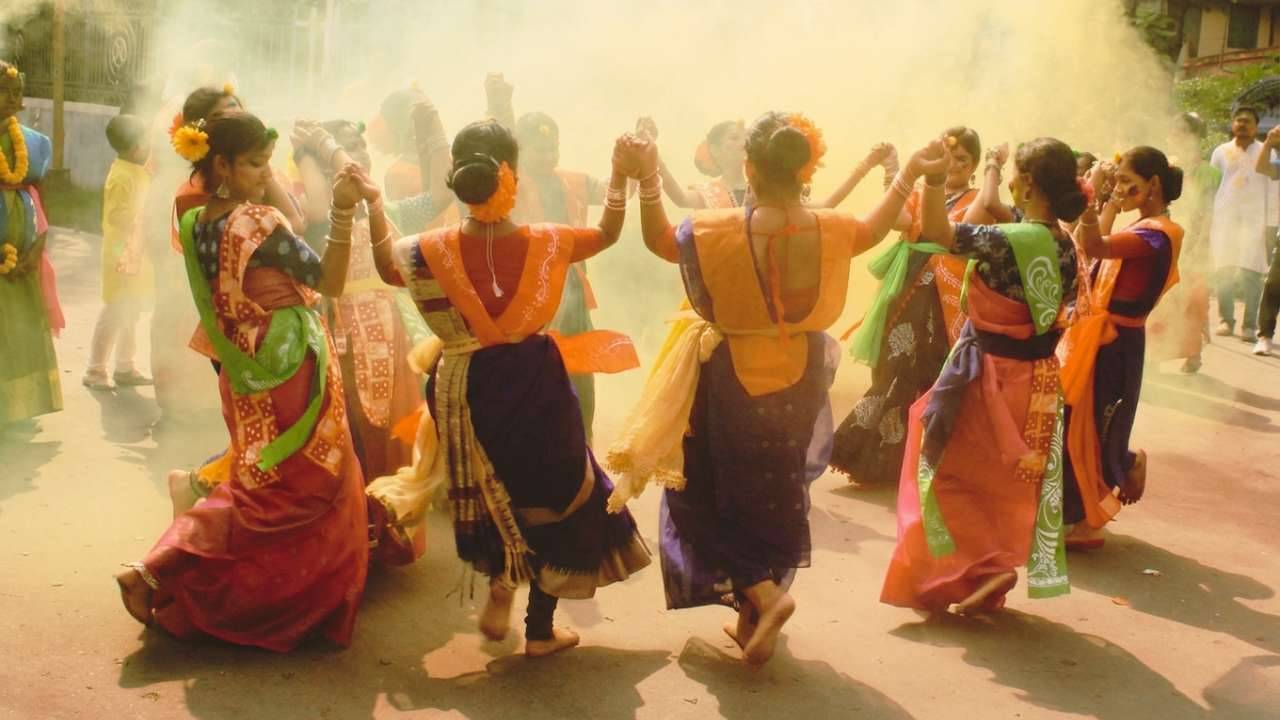
As the last tendrils of winter retreat and the gentle breeze whispers of impending warmth, Kolkata prepares to wear a vibrant coat. Spring, or Basanta, in our culturally rich city, isn’t merely a change in season; it’s a festival of colours, music, and a celebration of life. Popularly referred to as Basanta Utsav by the Bengali. This period, roughly corresponding with the festival of Holi, is a sensory feast you simply cannot miss. If you’re planning to experience the magic of Basa in Kolkata, here’s a guide by mapunseen to the top 10 best activities to immerse yourself in the festivities.
Let’s Understand the Uniqueness of Basanta Utsav
As mentioned before, ‘Basanta Utsav’ for many is synonymous with Holi or Dol. But in Kolkata and neighbouring areas, especially in Shantiniketan, it has a deeper cultural significance. It’s a celebration of nature’s rebirth, inspired by the traditions of the Nobel Laureate Rabindranath Tagore. Unlike the boisterous Holi celebrations in many parts of India, Basanta Utsav in Shantiniketan often leans towards a more artistic and cultural expression.
It is the celebration of cultural and religious harmony, where everyone, despite their social standing or circumstances, can come together to celebrate. The celebration started in 1923 with the aim uplift the cultural heritage of Bengal by blending music, dance, poetry, and colour. The Basanta Utsab is all about elegance, harmony, and the joy of nature. During this day, the students of Visva-Bharati University are dressed in yellow and singing Rabindra Sangeet to welcome the season.
1. Experience the Magic of Shantiniketan During Basanta Utsav
The need for a trip to Shantiniketan during Basanta Utsav is almost mandatory. It’s the epicentre of Tagore’s vision of celebrating the spring equinox. However, you must plan and book your travel and accommodation in Shantiniketan well in advance, as the town overflows with visitors during this period. The first thing you need to experience is the Grand ‘Prabhat Pheri’.
Start your day early with the Prabhat Pheri or the morning procession. Picture hundreds of students and artists from Visva-Bharati University, dressed in yellow (symbolising spring) or sarees with green borders, marching through the tree-lined campus. They sing Rabindra Sangeet and perform intricate dance steps, carrying flowers and singing praises to nature. You will find an air filled with the scent of palash and marigold flowers and the sweet strains of traditional music.
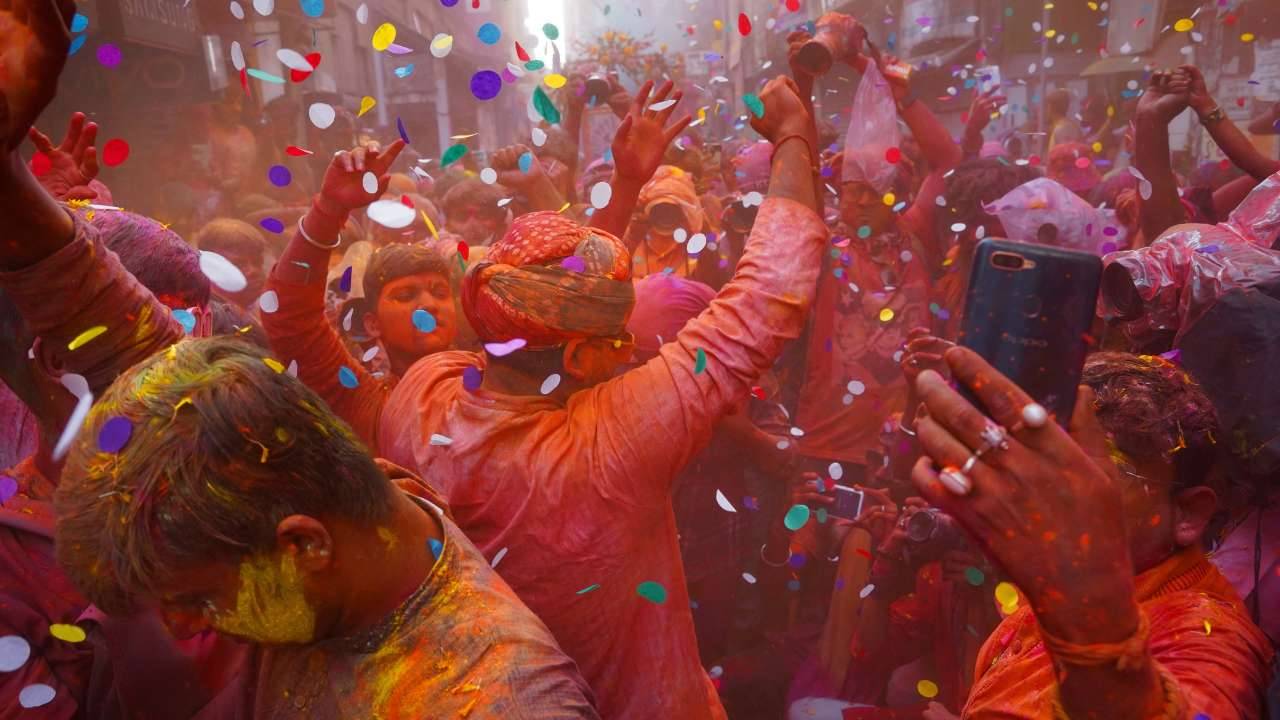
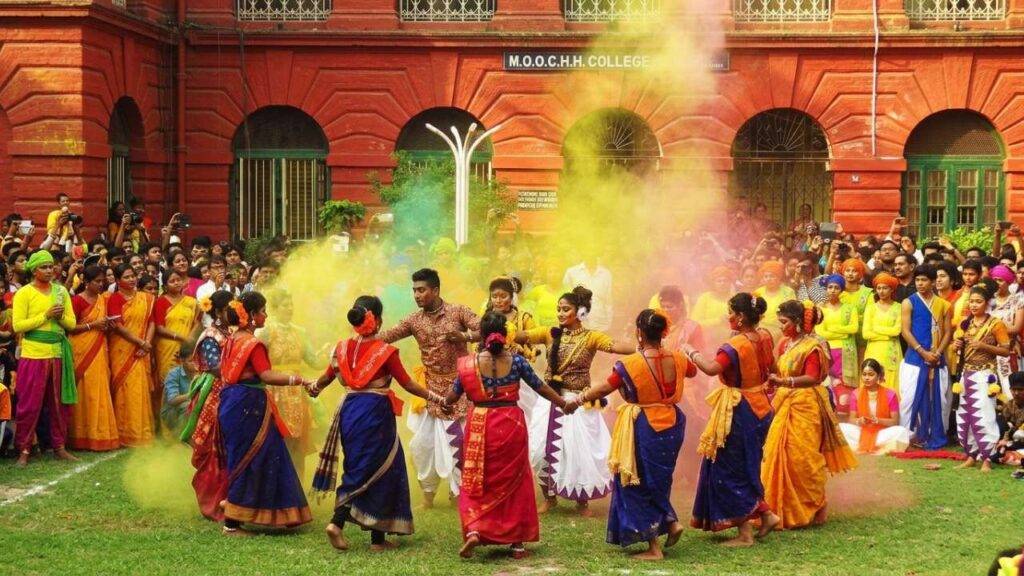
Furthermore, after the cultural performance, the atmosphere turns festive with the gentle rubbing of ‘abir’ (coloured powder) on each other’s cheeks. Unlike the more intense colour throwing elsewhere, here, it’s a mark of respect and affection. On the other hand, the main ground of the university becomes a stage for students and renowned artists to present dance dramas, songs, and musical performances inspired by Tagore’s works. You will find the events truly a soul-stirring experience.
2. Enjoy Basanta Utsav at Rabindra Bharati University
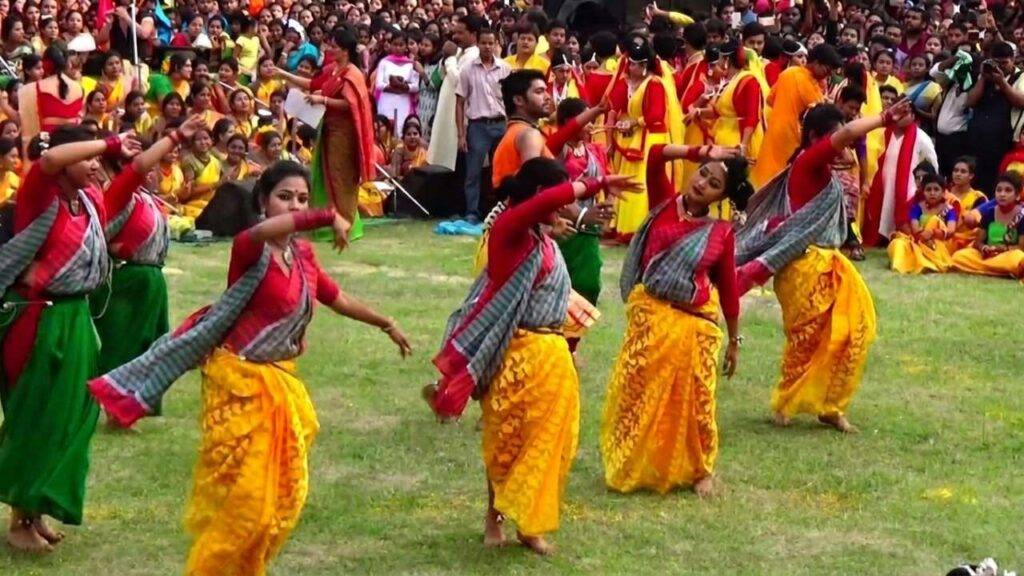
In case you were not able to go on a trip to Shantiniketan. The next best thing is to participate in the celebration at Rabindra Bharati University (Jorasanko Campus) in Kolkata, which offers a splendid alternative. This is the ancestral home of Kaviguru, making it a place of immense historical and cultural significance.
During Basanta Utsave, the university hosts elaborate cultural programs where students perform Rabindra Sangeet and classical and folk dances. The beautiful courtyard and halls of the Jorasanko Thakur Bari become alive with the sounds of spring. The focus of the celebration remains strongly on performance and art. Like Shantiniketan, colour-playing here is respectful, usually with abir applied to the forehead or cheeks.
3. ISKCON is Another Place to Experience Basanta Utsav
ISKCON, or the International Society for Krishna Consciousness, is another ideal place for the Holi festival celebration. The celebration here is a bit different from the usual. The day before Basanta Utsav is often celebrated as Dolyatra, a traditional festival where deities of Krishna and Radha are placed in a palanquin or swing (dola) and taken out in a procession. Hence, that day is auspicious to the members of the ISKCON.
Therefore, you should head to the ISKCON temple in Kolkata to witness a grand Dolyatra procession. The intricately decorated deities are placed on a beautifully adorned swing and taken through the streets. Devotees sing bhajans (devotional songs) and chant mantras with immense fervour. The procession features a gentle shower of flowers and natural-colored water on the deities and devotees, fostering a joyous and spiritual atmosphere.
4. A Dash of Urban Charm at Princep Ghat During Basanta Utsav
We all love Princep Ghat for its iconic white columns against the backdrop of the Vidyasagar Setu. This place has always been a favourite spot for Kolkata’s youth, especially during Basanta Utsav. You should join the hundreds of young people gathering here, dressed in vibrant clothes, equipped with pichkaris (water guns) and packets of abir. The energy is contagious, with groups singing popular songs and playing colours with abandon.
The utsab is also great for Photographers where they can capture the contrast of the traditional white pillars. As well as the modern bridge, the explosion of colours among the crowd makes for incredible photographs. It’s the perfect place to capture the dynamic and spirited side of Kolkata’s spring. Moreover, your experience won’t be complete without sampling the delicious street food. Grab some phuchka, jhalmuri, or kulfi while soaking in the festive spirit.
5. Basanta Utsab is the Celebration of Foodie Delights
No Indian festival is complete without food, and Basanta Utsav has its own culinary delights. The first thing you need to try is Thandai. It is a traditional, chilled milk-based drink made with nuts, seeds, spices, and often infused with bhang. Be somewhat wary, as it is a preparation of cannabis, though non-alcoholic versions are widely available. It’s a must-try for refreshing yourself during the colour play.
Next thing on your list is Gujiya, which is a sweet, deep-fried dumpling stuffed with khoya (milk solids), nuts, and dried fruits. They are ubiquitous during this time and are hard to resist. Also try Pua, sweet pancakes that are often deep-fried and served with rabri or malpua. However, there are also other things you need to be prepared for:
| Wear Old Clothes | If you plan on playing with colours, wear clothes you don’t mind getting stained. Cotton is a good choice. |
| Protect Your Skin and Hair | Apply a generous layer of coconut oil or oil-based lotion on your skin and hair before you head out. It makes it easier to wash off the colours. |
| Use Herbal Colours | Whenever possible, stick to herbal or natural colours made from flowers or plants. They are gentler on your skin and easier to clean. |
| Carry Water | Staying hydrated is essential, especially with all the activity. |
| Book Accommodations Early | As we have mentioned before, Shantiniketan gets very crowded during Basanta Utsav, so book your hotels well in advance. |
| Embrace the Spirit | The key to enjoying Basanta Utsav is to join in with an open heart. So don’t be shy and let the colours and music take over. |
Conclusion
For generations, Basanta Utsav has been more than just a local variation of the Holi festival. It is the concentrated sentiment and cultural bonding that have brought everyone together. It is not just tied to one of the places that we have mentioned, but the spirit of freedom, love for art and undying enthusiasm. Therefore, if you are yearning for connections and establishing a bond with nature, Basanta Utsav is the time of the year to make that happen. With all that said, we hope that this blog by mapunseen is able open new avenues for you.
FAQs
- What is the traditional dress code for the festival?
- Yellow (known as Basanti) is the signature colour of the festival, symbolising the blooming mustard flowers of spring. Women typically wear yellow sarees (often with red or green borders) and adorn their hair with orange Palash flowers. Men usually wear white or yellow kurtas and pyjamas.
- How is Basanta Utsav different from typical Holi?
- While Holi can be boisterous with water balloons and loud music, Basanta Utsav is a more graceful and cultural celebration. Inspired by Rabindranath Tagore, the focus is on Rabindra Sangeet (songs), classical dance performances, and the gentle application of dry colored powder (abir) rather than messy water-based colours.
- Where are the best places to experience it within Kolkata?
- The Jorasanko Thakur Bari (Rabindra Bharati University) is the most iconic spot for a traditional “Tagorean” experience. For a more youthful and energetic vibe, Princep Ghat and Eco Park are popular gathering spots, while the ISKCON Temple offers a beautiful spiritual celebration known as Dolyatra.